aiT WCET Analyzers statically compute tight upper bounds for the worst-case execution time (WCET) of tasks in real-time systems. They directly analyze binary executables and take the intrinsic cache and pipeline behavior into account.
 Qualification run results
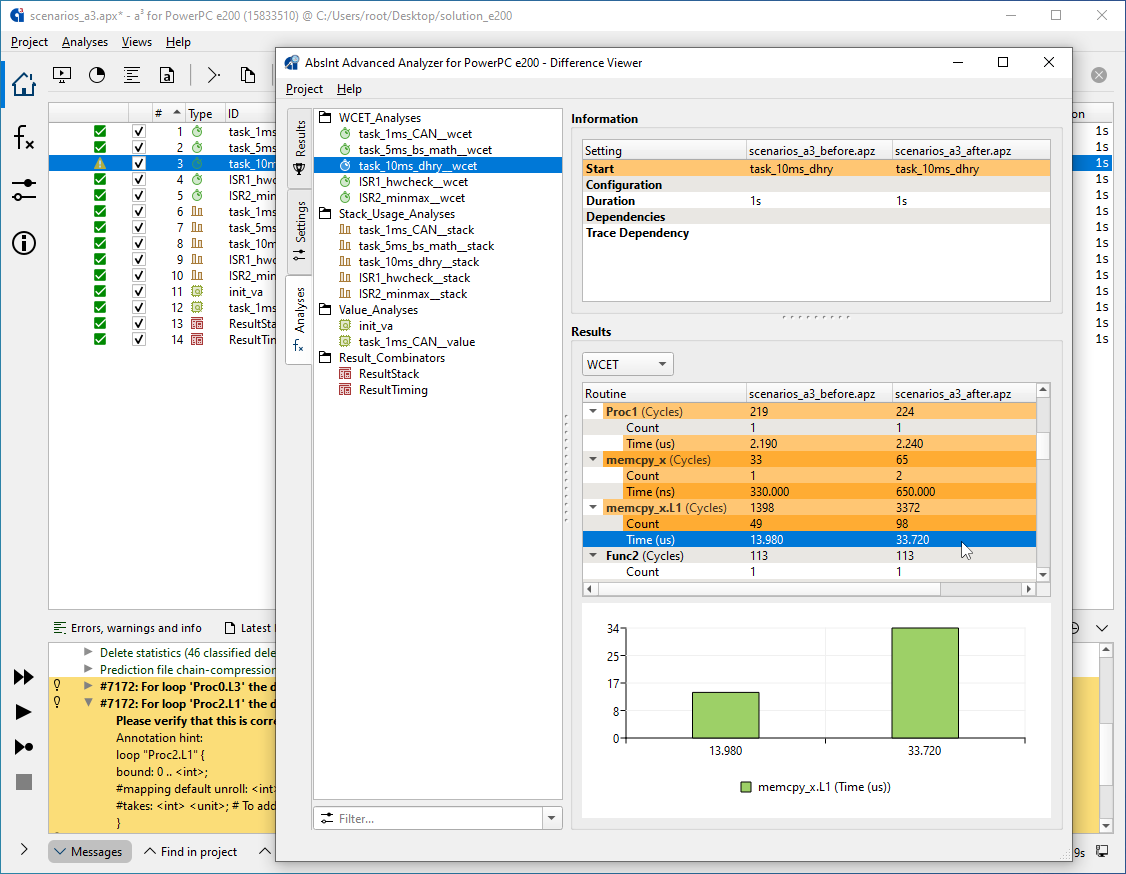 Difference analysis
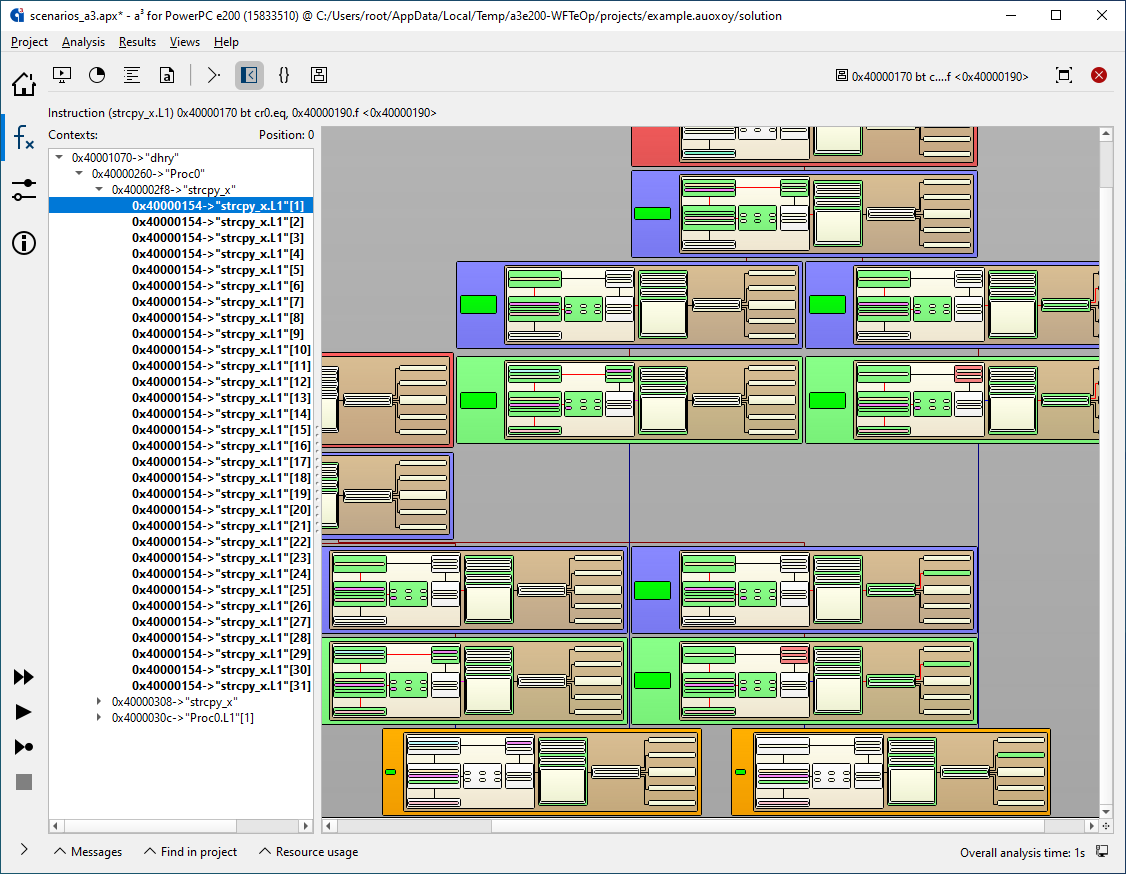 Visualization of cache and pipeline states
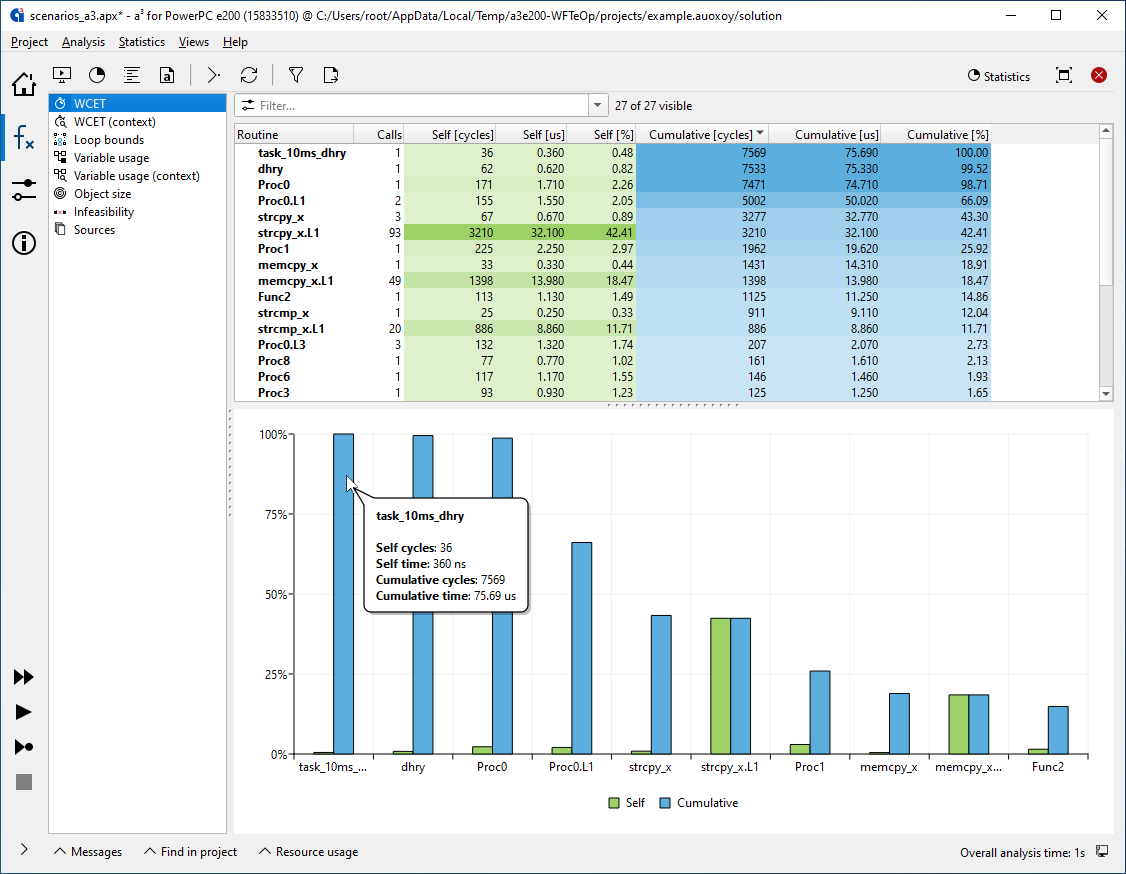 Tabular overview of the worst-case timing
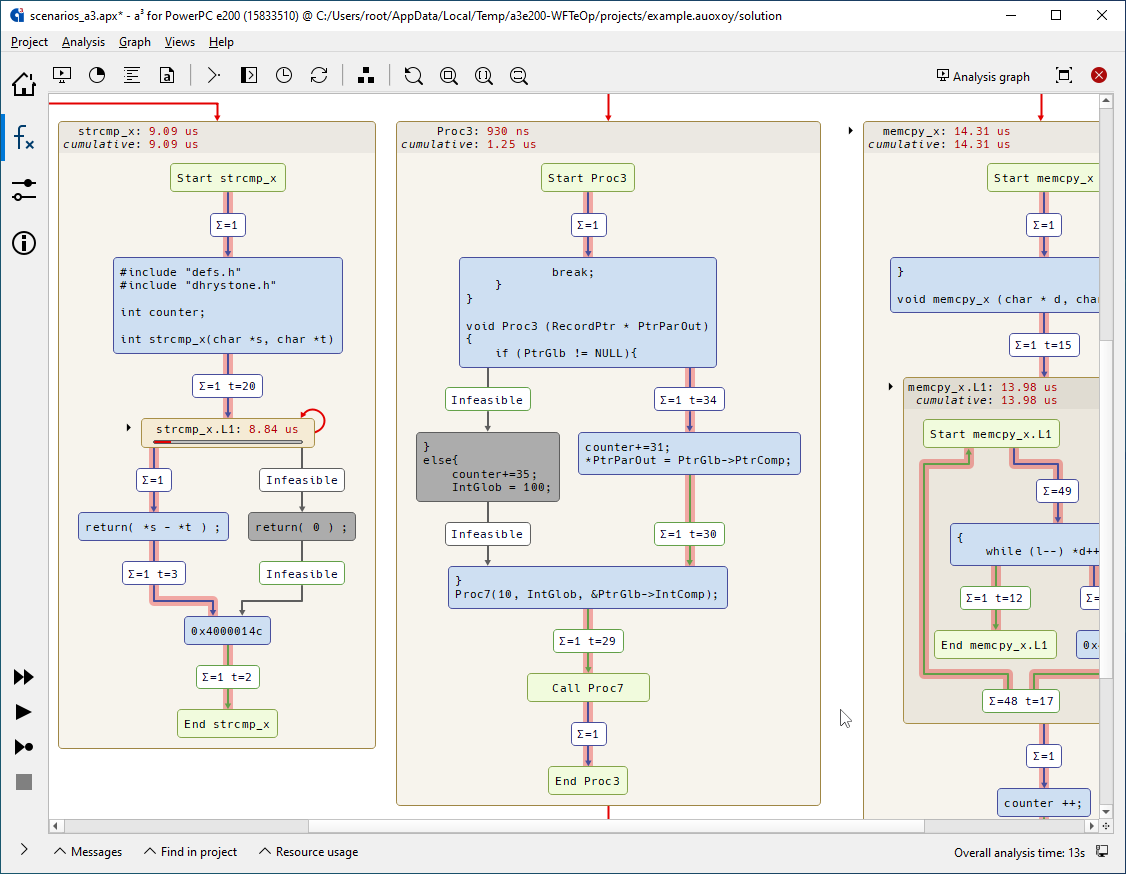 Control flow graph with WCET analysis results
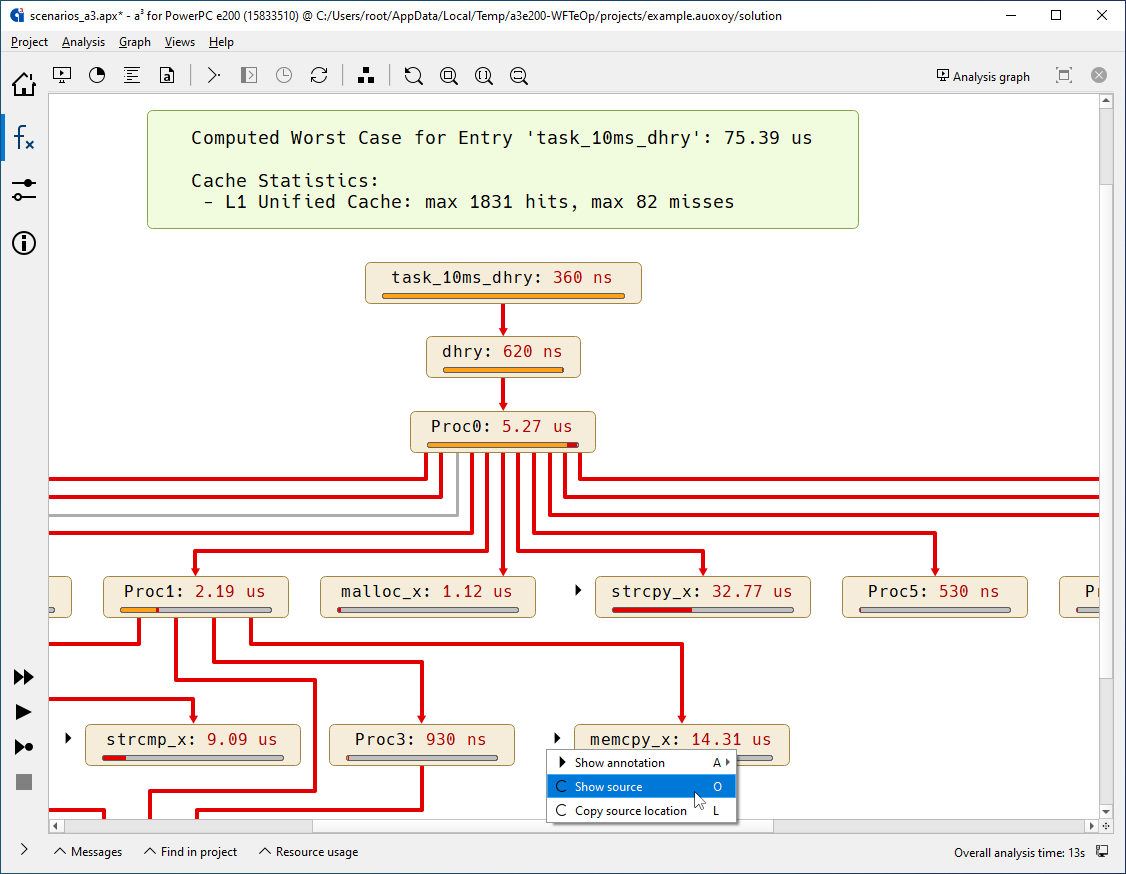 Call graph with WCET analysis results
The challenge
In real-time systems, each task has to be completed within a specific time frame in order to ensure that the system works correctly. In other words, it is essential that the worst-case execution time of each task is known.
However, determining the WCET is a challenge:
“Testing, in general, cannot show the absence of errors.”
- Testing by repeatedly measuring the execution time is tedious and not safe. It is often impossible to prove that all the conditions leading to the maximum execution time have been accounted for.
- Modern processor components such as caches and pipelines complicate the issue, as the execution time of a single instruction varies greatly depending on the execution history.
- Analysis methods that do not consider cache and pipeline behavior cannot provide safe results unless they deliberately overestimate the WCET, often by orders of magnitude, which leads to an unacceptable waste of hardware resources.
The solution
“Testing by itself is not sufficient.”
aiT WCET Analyzers provide the solution to these problems. Based on the technique of abstract interpretation and formal cache and pipeline models, they statically analyze a given task’s intrinsic cache and pipeline behavior and compute correct and tight upper bounds for the worst-case execution time.
A graphical user interface supports the visualization of the worst-case program path and the interactive inspection of the analysis results at any program point. A command-line mode enables easy integration into automated build processes. Qualification for ISO 26262, DO-178B/C, and other standards is greatly simplified thanks to easy-to-use Qualification Support Kits.
Your benefits
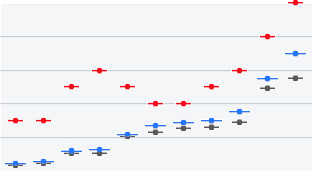
— Volvo’s traditional method for estimating WCET
— aiT analysis results
— measured WCET
- The static analysis guarantees that the computed WCET bounds hold for all inputs and each execution under any circumstances. Tedious testing is a thing of the past.
- aiT directly analyzes binary executables, exactly as they are executed in the final system. This requires no modification of your system’s operational behavior or performance, and no modification of your toolchain.
- The WCET bounds computed by aiT are extremely tight and thus reflect the actual performance of your system. Deadline adherence is ensured without wasting hardware resources.
- Using aiT is essential in meeting current safety standards such as ISO 26262, DO-178B/C, IEC-61508 and EN-50128, where static WCET analysis is part of the architectural safety requirements.
Who uses aiT?
aiT was originally designed in close collaboration with Airbus France. For twenty years now, it’s been used at the Toulouse plant for validating the timing behavior of critical avionics software, including the flight control software of the A380.
Daimler uses aiT in many automotive software projects, including the powertrain control system of the Actros truck.
Vestas uses aiT for static analysis of their wind turbine control software.
OHB uses aiT in the development of software for geostationary communication satellites and satellite navigation.
MTU Friedrichshafen uses aiT to demonstrate the correctness of control software for emergency power generators in nuclear power plants.
aiT is used in computer-science courses by a number of German universities, e.g. in Dortmund, Hamburg, Bremen, Erlangen-Nuremberg, and Ulm.
The Technical University of Munich uses aiT in the development, testing and optimization of flight control and navigation algorithms.
NASA used aiT as an industry-standard static analysis tool for demonstrating the absence of timing-related software defects in the 2010 Toyota Unintended Acceleration Investigation.
A multitude of supported processors
aiT is available for a vast variety of target architectures, ranging from simple processors like ARM7 to complex superscalar processors with timing anomalies and domino effects like MPC755, and multi-core processors like AURIX TC27x.
For high-performance processors that are not statically predictable, we offer a hybrid solution that combines aiT’s context-sensitive path analysis with non-intrusive real-time tracing. This approach is compliant with CAST-32A and EASA AMC 20-193.
An impressive set of helpful features
aiT builds upon half a century of academic research, incorporates two decades’ worth of feedback from commercial users, and offers many quality-of-life improvements, polished over the years.
 2000
2000 2007
2007 20142024
- Loop bounds, recursion depth, indirect function calls, virtual member functions, and mixed calling conventions are dealt with automatically whenever possible. Dead code is automatically recognized. Hidden recursions are uncovered.
- Easy-to-use and well-documented annotations let you fine-tune the analysis or supply it with additional knowledge that cannot be obtained statically. aiT helps out by proposing annotations that you can accept or modify with ease.
- The analysis is exceptionally fast for complex real-world software. Freely selectable entry points let you focus on the worst-case path or other areas of interest, while speeding up the analysis even further.
- A mature command-line mode and customizable XML reports provide everything you need for easy integration into your toolchain or automated build process.
- A state-of-the-art GUI offers interactive views for analysis results, statistics, code coverage, control flow, source code, assembly, DWARF debug info, symbol tables, analysis configuration, and more.
- The various views are interconnected in intuitive ways. Keyboard shortcuts and context menus put just the right features at your fingertips, right when you need them. Refined search capabilities let you quickly locate what you’re looking for.
- Difference analysis lets you compare analysis runs before and after making changes to your system, such that their effect on the worst-case timing can be immediately understood.
“aiT is very easy and straightforward to use”
“the best capabilities to resolve dynamic calls automatically”
“the most feature-complete tool”
“a clear winner in terms of additional functionality”
Comparison of WCET tools by the University of Stuttgart (PDF)
“able to handle every kind of benchmark and every test program”
WCET Tool Challenge 2006 final report (PDF)
“deals with almost all branches without further interaction”
WCET Tool Challenge 2011 final report (PDF)
“the best of its kind in the world”
DAEDALUS Project final report
Seamless integration into your toolchain




aiT supports easy integration with many state-of-the-art development tools, including:
- SCADE Suite, the market-leading embedded-software development environment from ANSYS
- TargetLink, the production-code generation tool from dSPACE
- Jenkins, the leading open-source automation server
- ASCET modeling tools from ETAS
- SymTA/S scheduling analysis tools from Symtavision/Luxoft
- WCC, the first WCET-aware C compiler from TU Dortmund
- RT-Druid, the Eclipse-based development environment from Evidence
aiT can also be combined in the same user interface with other analysis tools from AbsInt, such as StackAnalyzer for stack usage analysis.
Qualification support

Your usage of aiT can be qualified according to ISO 26262, DO-178B/C, and other safety standards. We offer Qualification Support Kits that help you simplify and automate your qualification process. These Kits are especially popular with our customers in the avionics and automotive industries.
See for yourself

You can try aiT for free, on your own applications, for a period of 30 days. The free license covers:
- One supported target processor of your choice
- Any number of supported compilers
- More than one physical machine if needed, but no VMs
- Windows, Linux, or both
- The ValueAnalyzer add-on, and also StackAnalyzer if you wish
Start your free trial today, complete with free online training and tech support.
Learn more
- How it works
- Features and restrictions
- Overestimation rates
- Supported processors
- Current release: 25.04
